How Rubber Bellow Seal Manufacturers in USA Prevent Leaks and Wear?

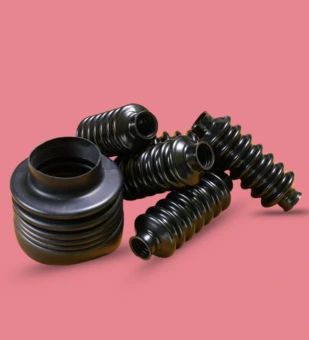
Industrial systems depend on seals to keep everything running smoothly. Many rubber bellows manufacturers in USA provide crucial components to prevent fluid leaks. These special products protect pumps from losing precious fluids during operation. The flexible barriers work constantly against pressure and motion forces.

Wear remains the biggest enemy of any sealing system. Moving parts rub against seal surfaces countless times each hour. This constant friction slowly damages even the toughest materials over time. The harsh environments inside industrial systems make things worse. Rubber bellows manufacturers in USA understand these challenges through decades of field experience.

The manufacturers invest in research about leak prevention techniques. The equipment records exactly how different designs perform under stress. This helps them in manufacturing the best designs.

Ready to See your Idea into Reality

We have served 157+ Clients so far…Discuss your Requirements with Our Experts.

OUR PRODUCTS

High-Quality Customized Bellows & Expansion Systems

  1. Material Selection for Leak Prevention

    Rubber bellows manufacturers in the USA test many materials to ensure leak prevention. EPDM is ideal for water and steam applications because it resists moisture damage and remains flexible even after years of exposure to wet conditions.

    Viton is used in oil and fuel contact environments as it resists harsh chemicals. For hydraulic systems with continuously changing pressure, nitrile compounds are most suitable. This material retains its form and does not degenerate under hydraulic fluids.

    Silicone is applied in extreme high and low temperature environments. It can handle wide temperature fluctuations without cracking or becoming brittle. Manufacturers carefully match the rubber type to the specific fluid to prevent costly failures.

    Reactive rubber may turn soft or solidify when exposed to incompatible chemicals. To avoid this, manufacturers conduct long compatibility tests before finalizing a design.

    • The hardness of the material influences sealing capacity and wear resistance.
    • Blended compounds often perform better than standard rubber formulations.
    • Temperature cycling tests reveal long-term performance faults.
    • Colour coding helps differentiate rubber compounds during installation.
  2. Design Features to Reduce Wear

    Many flexible bellows manufacturers in the USA focus on creating convoluted designs that flex without stress. Accordion-like folds distribute movement across the entire surface instead of concentrating it in one area. Wall thickness is carefully balanced between strength requirements and flexibility.

    Reinforced edges are designed to withstand constant rubbing against metal surfaces. These thicker sections resist wear even after thousands of operational cycles. Silicone bellows manufacturers in the USA typically provide smooth inner surfaces to further enhance durability.

    A smooth internal finish reduces friction that would otherwise generate heat and wear. Most designs avoid sharp corners, which can become stress concentration points during operation and lead to premature failure.

    Construction Features

    Multi-ply construction significantly extends the working life of premium bellows. Multiple layers of different materials work together to resist mechanical, chemical, and thermal damage. Uniform fold depth across the product ensures even distribution of mechanical loads throughout the bellow body.

    • Mounting zones use textured outer surfaces for improved grip.
    • Flex points are precisely defined to control bending locations.
    • Internal supports prevent collapsing under vacuum conditions.
    • Connection points are tear-resistant due to transitional thickening areas.
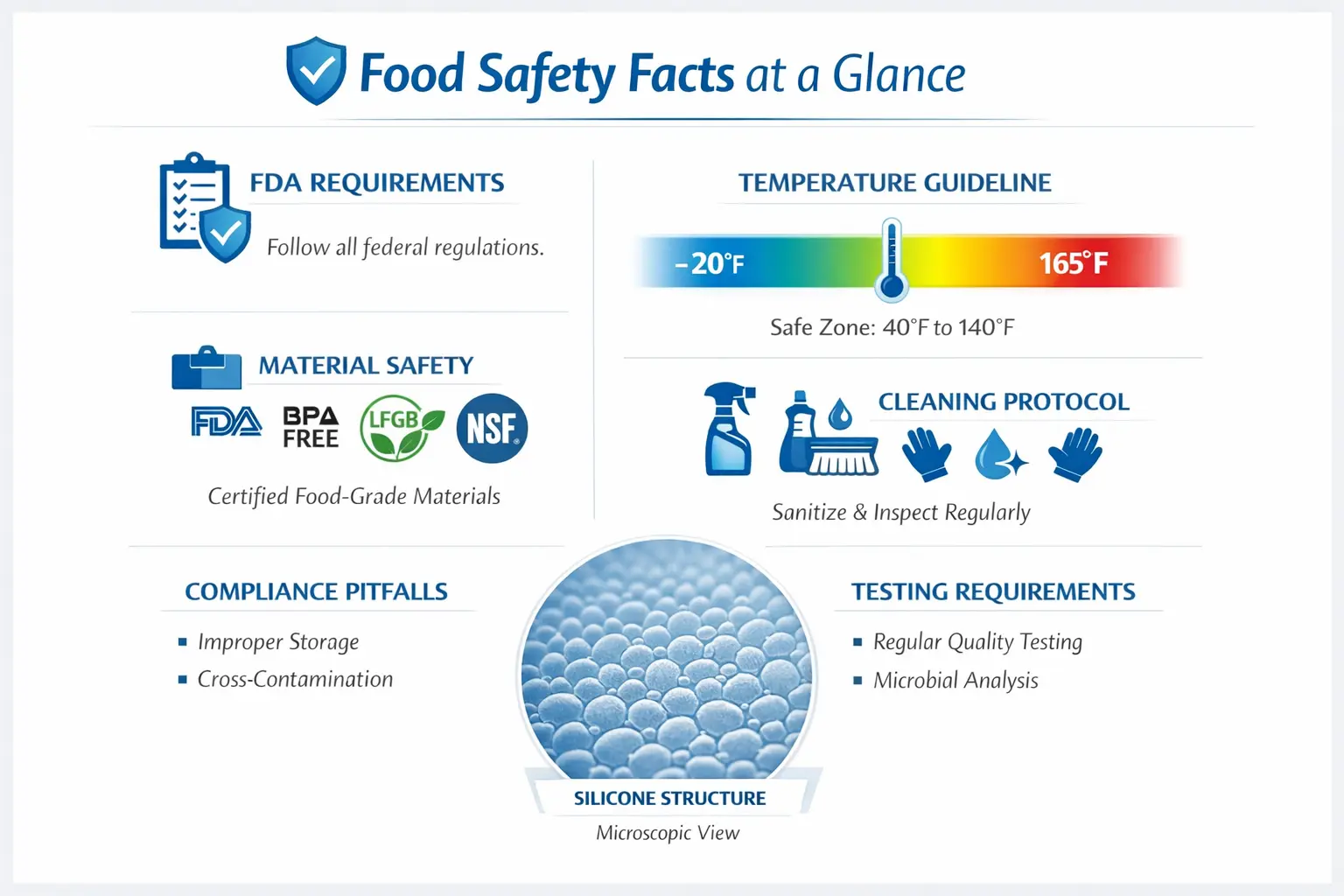
food-grade-silicone-structure

  1. Surface Treatment Methods

    Rubber bellow seal manufacturers in the USA apply specialized coatings to minimize friction-related damage. These thin protective layers create a barrier between moving components and the rubber surface. PTFE linings help prevent chemical attacks before they can degrade the underlying rubber compound, extending service life in aggressive chemical environments.

    Exterior rubber hardening is often achieved through a chlorination process, which strengthens the outer surface without affecting the internal structure. This treatment produces a tough, abrasion- and cut-resistant skin. Bellows boot manufacturers in the USA also use plasma treatment on bonding surfaces, allowing adhesives to bond more effectively through microscopic surface activation.

    Some products receive lubricant layers directly during the molding process to further reduce friction and wear during operation.

    UV Filter Compounds

    UV-resistant additives are blended into bellows designed for outdoor use to block sun-related damage. These compounds help prevent cracking and color fading over years of exposure. Surface texturing enhances both sealing performance and handling during installation by increasing controlled friction.

    • Anti-static treatments reduce dust buildup on critical surfaces.
    • Hydrophobic coatings repel water from sensitive areas.
    • Colour-fast treatments maintain appearance in harsh environments.
    • Micro-texturing improves sealing without increasing wear rates.

Quality Testing and Inspection

Test Type Purpose Method Used
Pressure Test Check leak resistance Apply air/water under pressure
Flex Test Measure fatigue life Repeated bend cycles
Hardness Test Verify material strength Durometer reading
Chemical Soak Assess fluid resistance Immerse in target fluids
Dimensional Check Confirm size accuracy CMM or calipers
Visual Inspection Spot surface defects Manual or camera scan
Temperature Test Test heat tolerance Expose to high/low temps
5

Countries

11

Industries Served

756

Projects

264

Clients

  • Precision Manufacturing Processes

    Many rubber expansion bellow manufacturer in USA relies on compression molding for consistent results. This process squeezes raw rubber into precision molds under high pressure. Injection molding is for complex shapes with internal features. The method forces liquid rubber compounds into every corner of the mold cavity.

  • CNC Mold Accuracy & Curing Control

    CNC-cut molds create exact dimensions that match engineering specifications perfectly. The computer control eliminates human error in the tooling process. The exhaust bellows manufacturer in USA maintains strict temperature control during curing. The smallest changes may alter the manner in which the rubber conducts once it has been manufactured.

  • Automation & Clean Room Manufacturing

    The automated systems handle repeatable tasks to reduce variation between parts. These robots perform the same motions identically thousands of times per day. The clean room conditions prevent dust and contaminants from ruining sealing surfaces. Any microscopic particles can create leak paths if trapped during manufacture.

  • Inspection, Tracking & Packing

    • During production, dimensions are checked by laser measurement systems.
    • X-ray examination identifies internal defects.
    • The batch tracking is used to maintain material consistency among the production runs.
    • Automated packing avoids pre-installation handling damage.

  • Proper Installation Guidelines from Manufacturers

    The bellow cover manufacturer in USA provides detailed guides with their products. They emphasise cleaning the shaft thoroughly before fitting any seal. Dirt trapped between surfaces causes leaks from day one. Stretching bellows too much during installation damages internal structures.

    Proper alignment remains crucial for long seal life in moving systems. The bellow must sit square to the shaft to prevent uneven wear. The manufacturers specify the correct lubricant to use on contact areas. The wrong type can cause rubber deterioration that leads to leaks.

    Many installation technicians must check for cuts or nicks before mounting. Any small damage often grows into major failures under working conditions. The torque specifications for housing bolts ensure even compression. Excessively tight causes distortion, whereas excessively loose causes leakage between sealing surfaces.

    • Equipment to install each bellow.
    • There are temperature requirements to guard against installations.
    • Break in measures increase life.
    • Checklists can be used to ensure proper mounting.

Conclusion

The domestic manufacturers continue to find innovative solutions. They combine material science with precision engineering techniques. The industry continues evolving toward more durable solutions. Our team uses proven methods to manufacture bellows. We select materials based on your specific working conditions and test every product before shipping. For bellows that perform reliably in your equipment, reach out to our specialists at (647) 294-5240. You can also send your requirements to info@customrubberbellows.com.

×

Get Ready to change your Product Vision into Realty...

Chat
X Get Free Consultation + CAD Design worth $500
Chat
X We are currently OFFLINE!
Please share your REQUIREMENT below and we'll get back to you!